

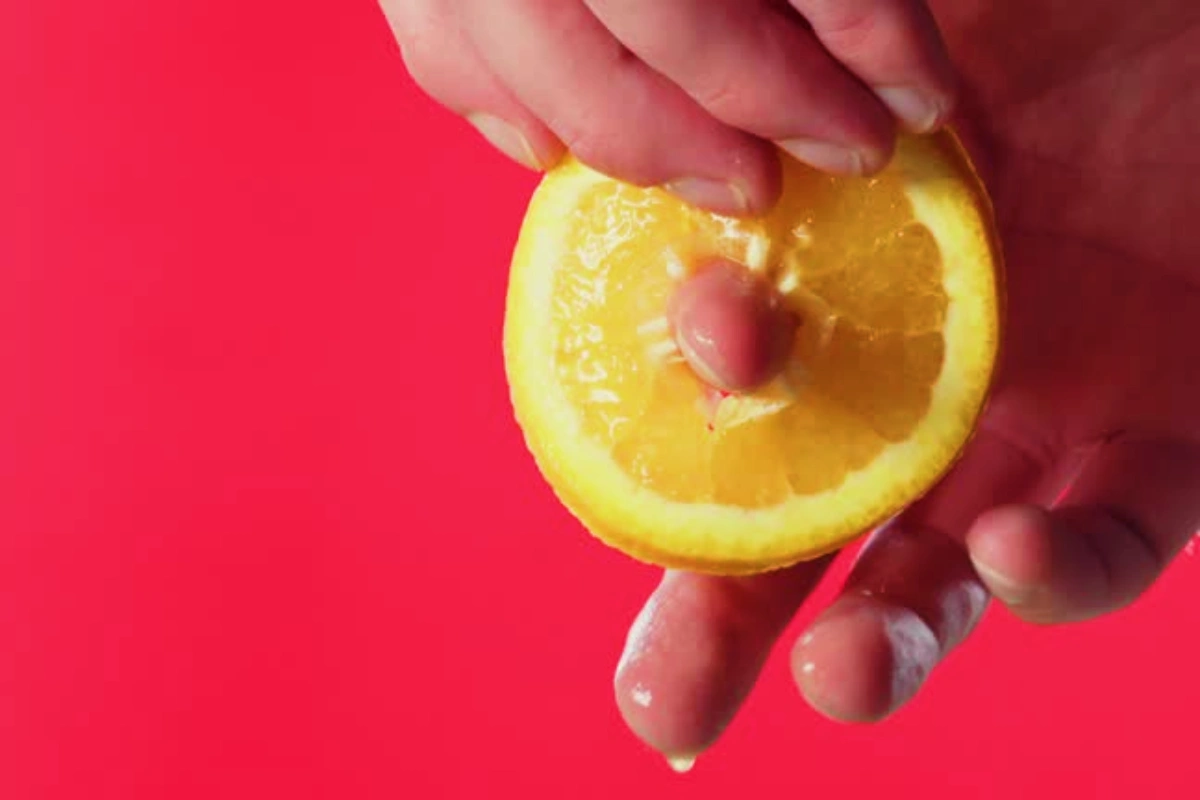
To be honest, when I first saw this “lemon,” I was skeptical. It looked so harmless—unlike traditional tools whose purpose is immediately obvious, it resembled more of a small trinket casually placed on a table, and was even a bit… cute.
But as you know, some things are all the more intriguing the gentler they appear on the outside.
I usually treat this kind of experience like a “tasting.” Not the kind where you wolf it down, but where you take your time, biting into it slowly and savoring how it transforms in your mouth.
Lemons are quite contradictory by nature. You might say they’re sour, yet sometimes they have a hint of sweetness; you might say they’re intense, but if handled right, they’re actually quite delicate.
This toy is much the same.
Don’t Rush the First Bite
A lot of people make the same mistake right away—they’re too eager. It’s like the first time you eat a lemon. If you bite into it too quickly, the sourness completely hits your taste buds at once, and you can’t really taste anything else.
Air-pressure toys are the same. It’s not about “strength,” it’s about rhythm.
If you start directly at the highest setting, that kind of continuous pulse can actually make your nerves struggle to adjust. Your body will naturally tense up, and you might even feel a bit resistant.
What I usually recommend is to let it “pause” around the area first. Like placing a lemon near your tongue and letting the scent pass through first before slowly getting closer. At this stage, you’re basically letting the body “recognize the flavor.”
A Small Misunderstanding About the “Suction” of Lemon Toys
When people hear the word “suction,” they often imagine a strong pulling sensation. But that’s not really accurate. It’s more like air gently “pushing” and “pulling.” This rhythm needs you to slow down and feel it, and you’ll notice it’s not a single type of stimulation, but more like waves. Sometimes light, sometimes slightly deeper. Over time, it feels less like direct contact and more like a “wrapping” sensation.
If you use eating a lemon as a comparison, it’s basically—not biting, but letting the juice slowly spread in your mouth.

Placement Matters More Than You Think
Some people feel nothing, and it’s often not because of the toy—it’s because it’s not aligned correctly.
This design works around a very small area. If you’re even slightly off, it turns into “air passing by” instead of being “locked in.” When it’s positioned correctly, you’ll feel a very subtle sealing sensation. It’s like that small area is separated out, and the outside world feels a bit farther away. Once you get it right, it’s actually quite noticeable.
Why Some People Get Hooked Instantly
I’ve been asked this many times. The reason is actually simple—it bypasses a lot of “adaptation steps.” Traditional vibration is more like giving you a clear signal, while air-pressure stimulation is more like letting your body chase the rhythm itself. Some people’s nerves are especially sensitive to this kind of “indirect stimulation,” so they can end up in a state like—before they even realize it, they’re already there.
But some people feel nothing at all, which is also normal. It’s like some people enjoy the freshness of lemon, while others think it’s too sour.
A Little “Lubrication” Makes It Smoother
This is something a lot of people overlook. Even for external use, a bit of lubrication can make the experience smoother. It’s like adding a little honey to a lemon. Not to cover the taste, but to make it easier to accept. Especially at the beginning, this kind of “buffer” helps the body relax more.
But this relaxation varies from person to person. I need to be clear about that. A lot of things online make these toys sound very “magical,” as if everyone can reach a certain state quickly. Reality isn’t that consistent. Some people react very fast, even surprisingly so. Others need time, and some even feel like it’s “not as good as traditional methods.” It depends on body habits and nerve sensitivity. A toy alone doesn’t determine everything.
When Used With a Partner
If you’re with a partner, this “lemon” becomes more like a seasoning. It doesn’t have to be the main focus, but it can add more variation to the experience. For example, adding this kind of air-pressure sensation into an existing rhythm can make things feel richer.
But the key is—don’t treat it like a task. It’s more like casually picking up a slice of lemon and squeezing a bit in. Sometimes more, sometimes less, depending on the moment.
Final Thought on Lemon Flavor
I’ve tested many similar products and heard a lot of feedback. If I had to sum it up, I’d say this type of toy is more like a “flavor choice” rather than an “upgrade.” It doesn’t replace everything, but it does offer a slightly different experience.